
Developer Experience Starts with Deep Work. Why the Best Engineering Organizations Measure Engineering Capacity, Not Just Productivity

Every engineering organization wants to improve Developer Experience. Over the past few years, companies have invested heavily in internal developer platforms, AI coding assistants, CI/CD pipelines, documentation, self-service infrastructure, and engineering productivity initiatives. The underlying assumption is simple: better tools lead to better software.
But there is a question that is surprisingly absent from most DevEx discussions.
How much uninterrupted time do engineers actually have to improve the engineering system itself?
We call this engineering capacity—the time and cognitive bandwidth engineers have not only to build products, but also to improve the engineering system itself.
Because every improvement to Developer Experience is, ultimately, an engineering task. Someone has to build the internal platform. Someone has to automate deployments. Someone has to redesign the CI pipeline, improve documentation, reduce technical debt, or integrate AI into existing workflows.
None of those improvements happen between back-to-back meetings or while constantly switching context. They require time to think.
As AI makes writing code increasingly easier, the scarce resource in software engineering is no longer typing speed or implementation effort. It is sustained human attention—the ability to understand complex systems, solve difficult problems, and continuously improve the way software is built.
Leading engineering organizations are already optimizing for exactly that.
Developer Experience Is an Enablement Function
Developer Experience has evolved significantly over the last decade. Initially, the conversation centered around developer satisfaction. Better tooling, smoother workflows, and fewer frustrations were expected to make engineers happier and, as a result, more productive.
That perspective is still valuable, but today’s leading engineering organizations think about DevEx differently. Developer Experience has become an enablement function.
Its purpose is not to increase individual productivity. Its purpose is to remove organizational friction so engineers can spend more time creating value.
This shift is visible across the industry.
Microsoft encourages engineering leaders to use metrics not as performance scorecards but as inputs for better decisions. Rather than measuring individual output, they look for systemic obstacles—meetings, waiting time, tooling friction, and context switching—that reduce developer effectiveness.
Uber’s engineering productivity initiatives follow the same philosophy. Instead of asking developers to work harder, they focus on eliminating friction: slow builds, dependency management, feedback loops, and unnecessary coordination. Productivity improves because engineers spend more time engineering and less time navigating the organization.
Stripe deliberately protects maker time while maintaining organizational alignment, recognizing that software development requires both collaboration and uninterrupted concentration. Google has demonstrated through research that developers consistently associate productive days with having sufficient time for deep, uninterrupted work. Pipedrive redesigned collaboration practices to protect focus instead of assuming constant availability should be the default.
Although these companies use different approaches, they all optimize the same thing. Not activity. Not utilization. Not even output.
They optimize the conditions that allow engineers to do their best work.
The Missing Piece in the DevEx Conversation
There is, however, another perspective that deserves more attention.
Most discussions about Developer Experience assume a relatively simple relationship. Better Developer Experience leads to more deep work. That is certainly true. But it is only half of the story.
The reverse relationship is equally important. Developer Experience itself improves because engineers dedicate time to improving it.
Every automation script, every internal tool, every deployment improvement, every testing framework, every developer portal, every documentation update, and every platform enhancement requires engineers to stop delivering features and instead invest in improving the engineering system.
That work requires uninterrupted thinking.
In other words, deep work is not only an outcome of good Developer Experience. It is what enables Developer Experience to evolve.
This creates a reinforcing cycle.
The more uninterrupted time engineers have, the more they improve the engineering environment. The better the engineering environment becomes, the less friction developers experience.
Less friction creates even more uninterrupted time.
Organizations that understand this cycle improve continuously. Organizations that don’t eventually become trapped in maintaining increasingly complex systems with little capacity left to improve them.
Deep Work Unlocks Engineering Capacity
This distinction leads to an important realization. The real objective is not deep work itself. The objective is engineering capacity.
Engineering capacity is the time and cognitive bandwidth available for engineers to create value—not only by building products but also by improving the systems that allow everyone else to build products more effectively.
Every unnecessary meeting consumes engineering capacity. Context switching consumes engineering capacity. Poor organizational design consumes engineering capacity. Developer Experience exists to create more of it.
Deep work is how engineers convert that capacity into innovation.
Seen from this perspective, DevEx is no longer about tools alone. It becomes an organizational capability that continuously expands engineering capacity.
Three Ways Organizations Create Engineering Capacity
If Developer Experience is about creating engineering capacity, the next question becomes straightforward.
How do organizations actually create more of it?
Across our work with technology organizations, we’ve repeatedly seen three different approaches.
The first focuses on improving everyday collaboration habits.
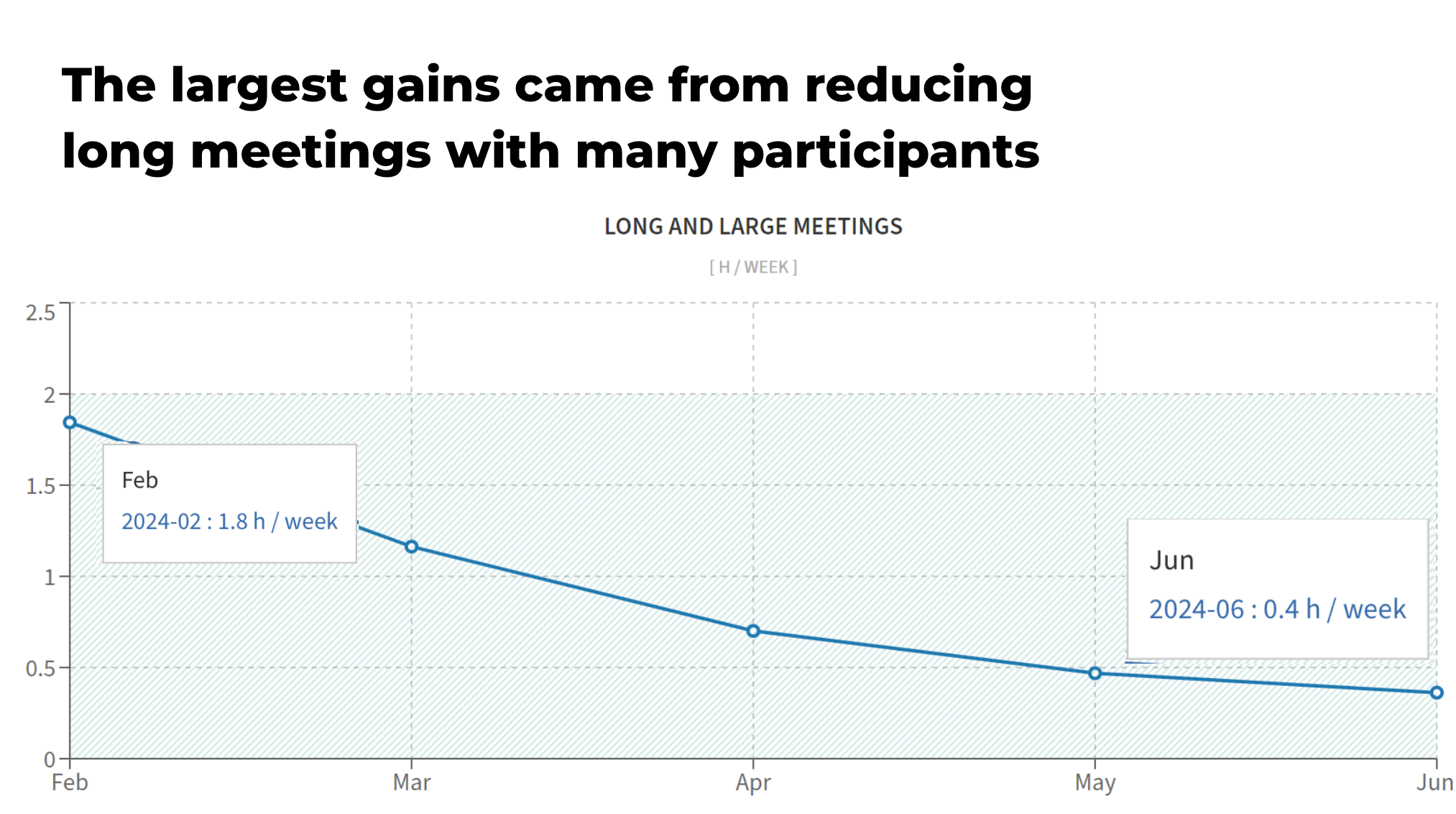
A global e-commerce company introduced our Work Smart methodology across its Technology organization. Rather than launching another meeting reduction initiative, teams received weekly collaboration insights, AI-powered recommendations, and personalized suggestions for improving the way they worked together. Large meetings were reviewed, unnecessary synchronization was reduced, and recurring status meetings gradually moved to asynchronous communication.
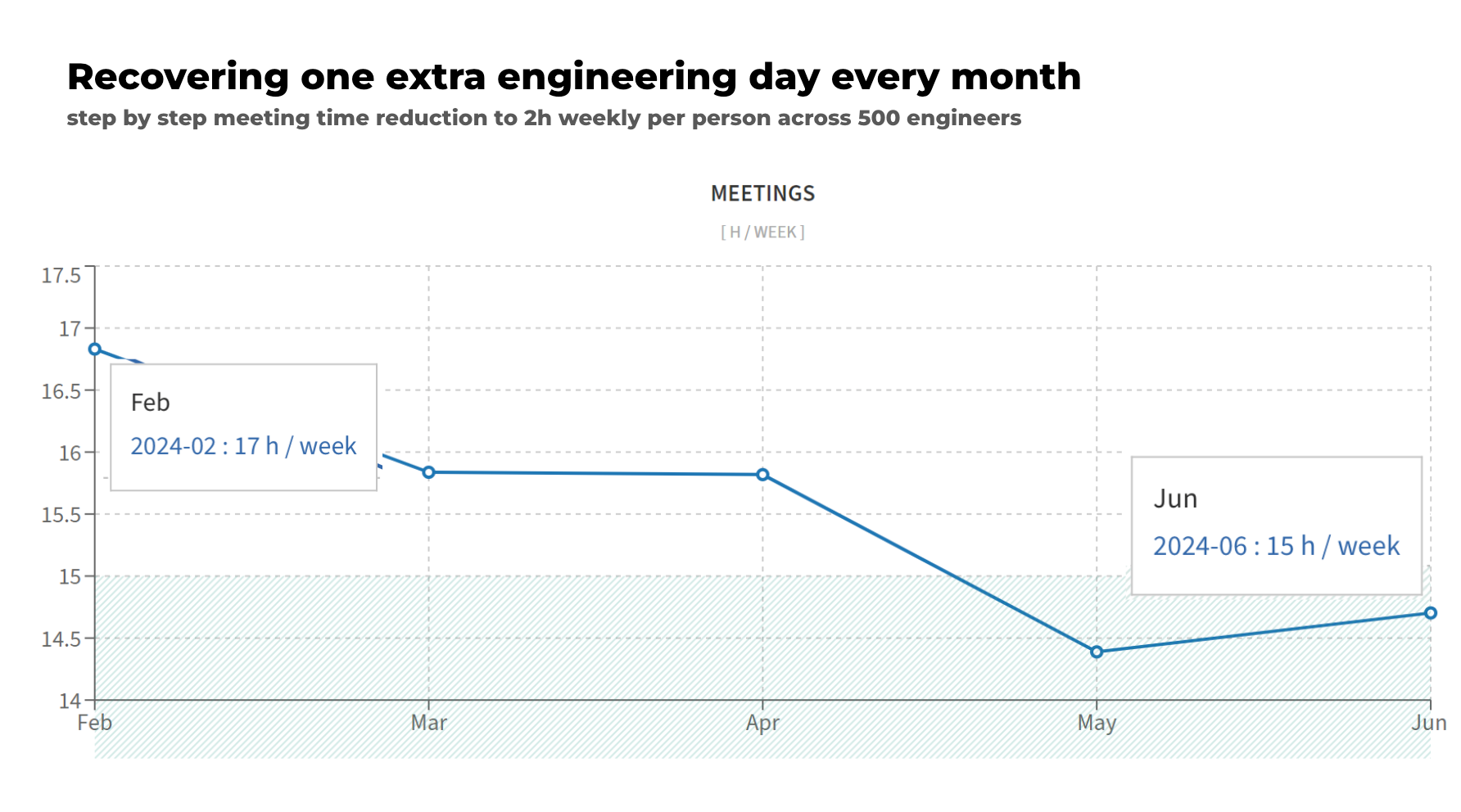
Within three months, average meeting time decreased by approximately two hours per week per person.
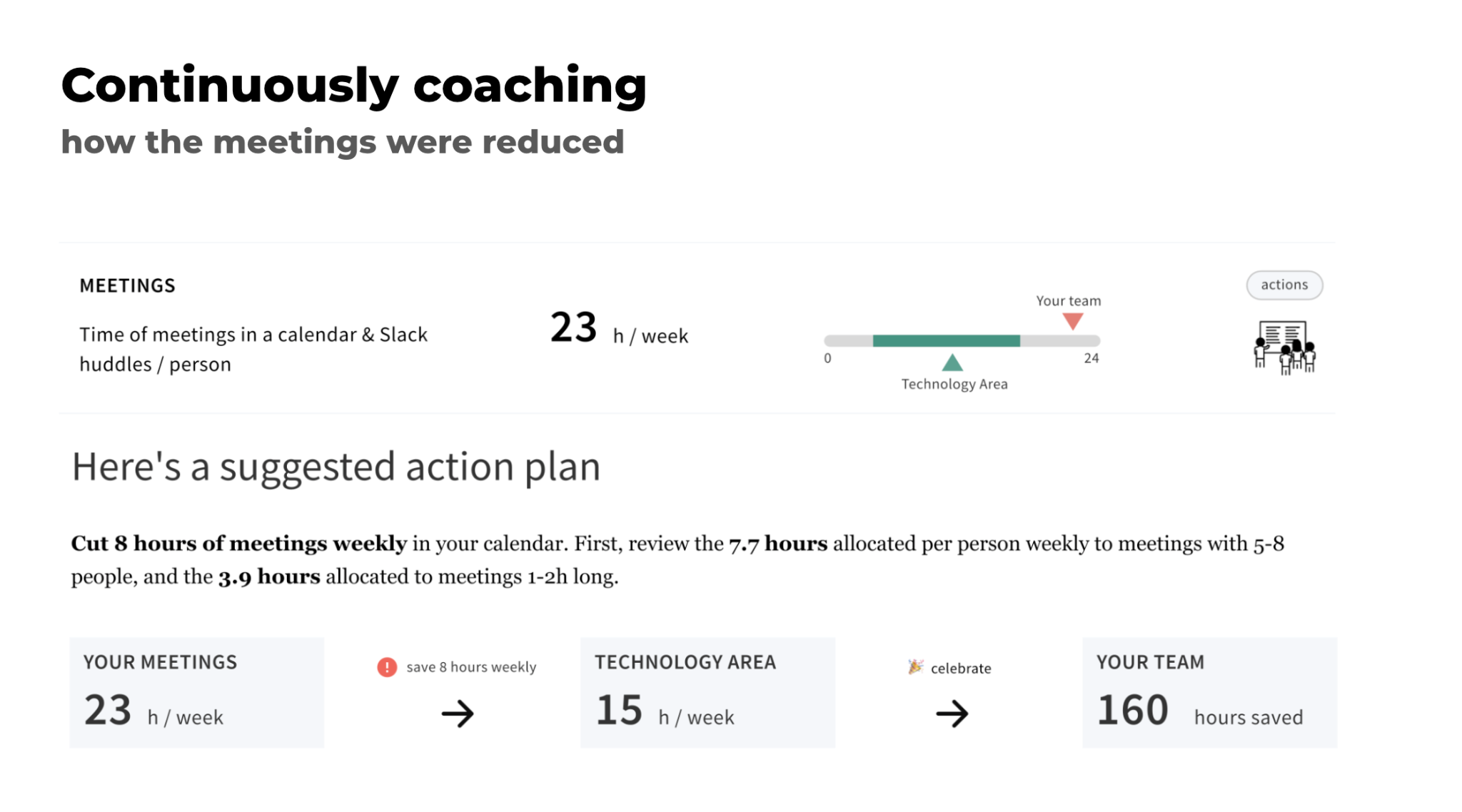
That translated into something much more meaningful than fewer calendar invitations.
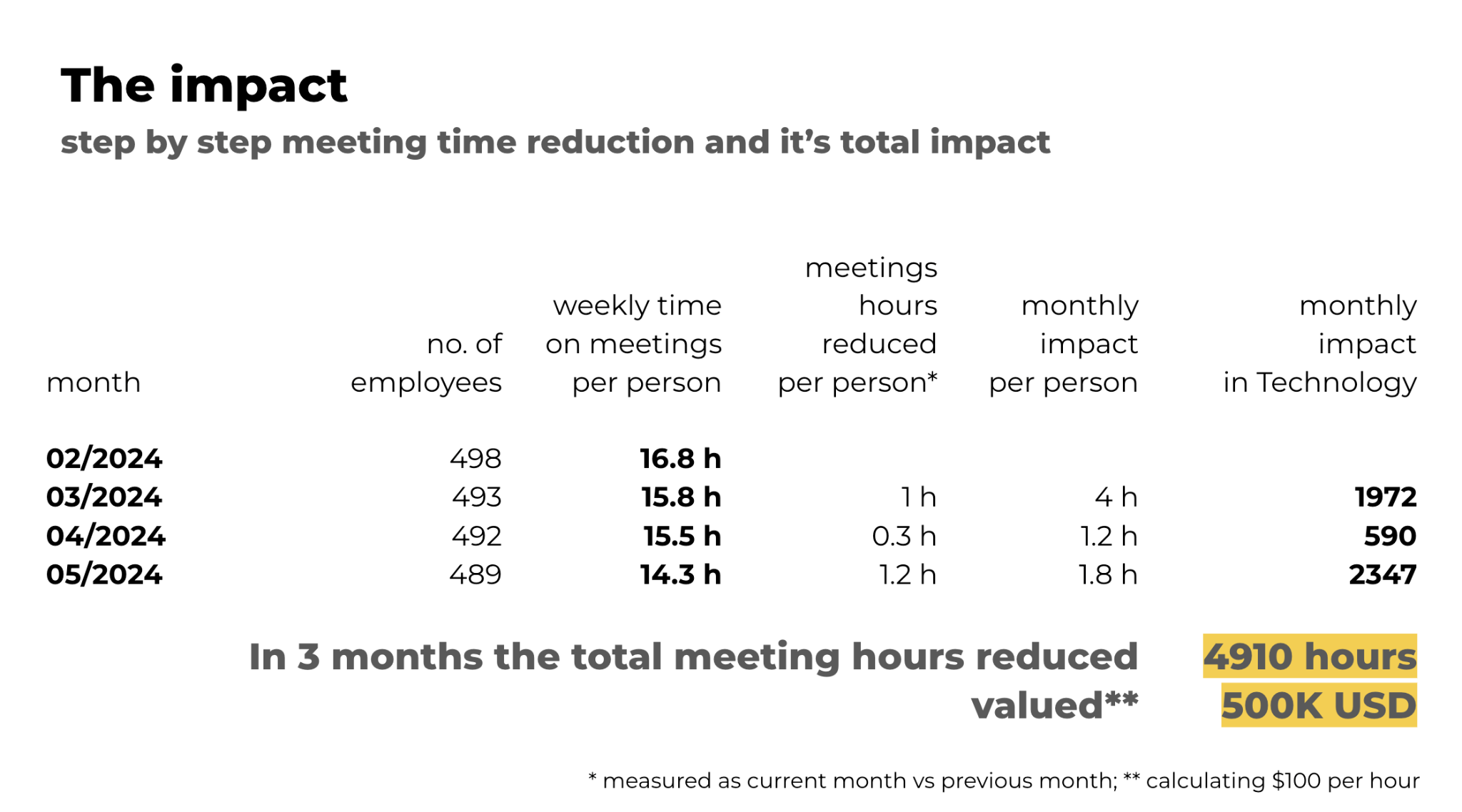
Every engineer gained approximately one additional day every month for uninterrupted engineering work, while the organization recovered nearly 5,000 hours of engineering capacity.
The second approach focused not on engineers, but on leaders.
In a technology company with around one thousand employees, approximately two hundred managers and strategic leaders redesigned their collaboration habits. Instead of spending every day reacting to fragmented calendars, they recovered an average of five hours every week for uninterrupted thinking.
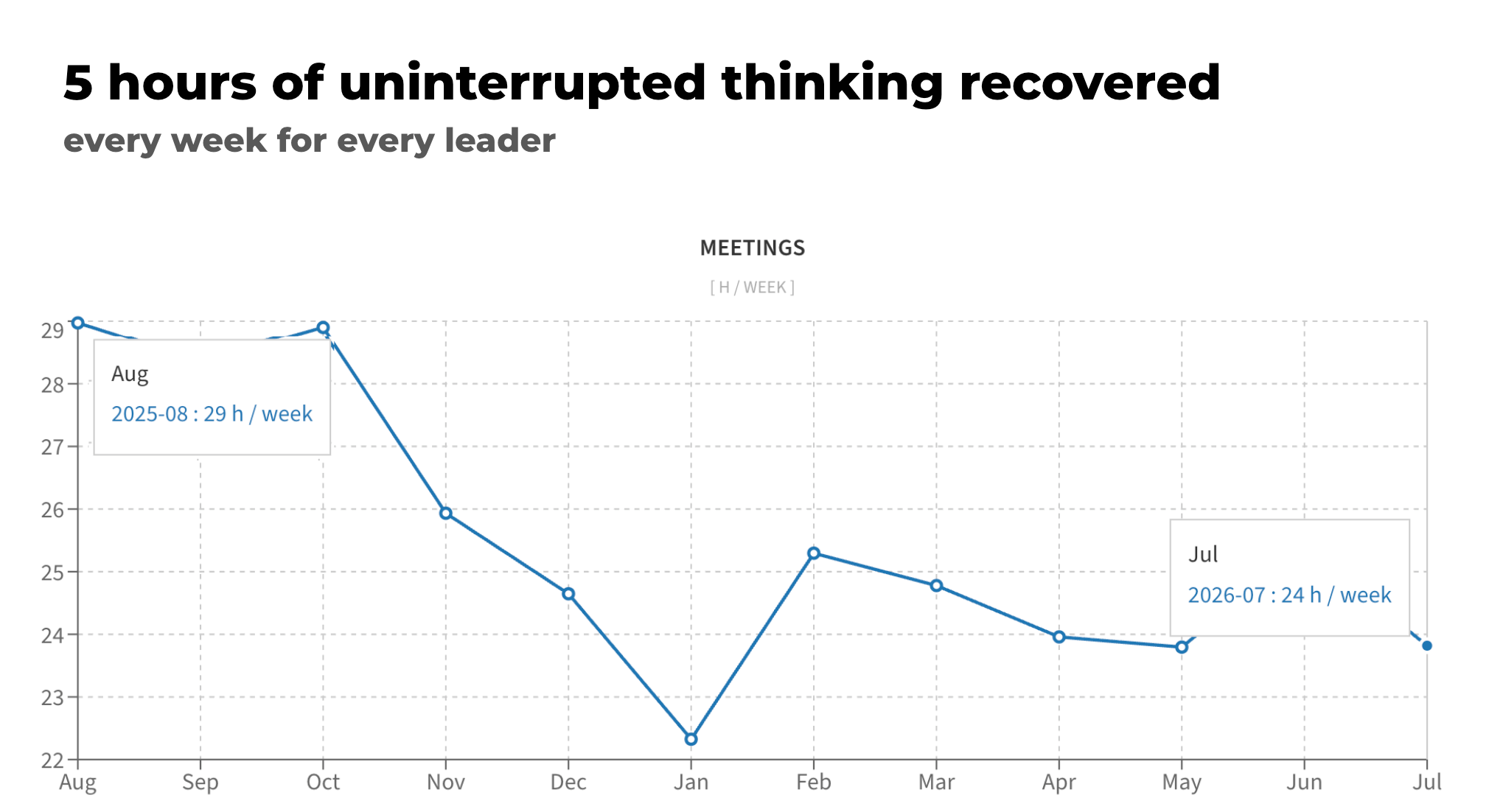
Those hours weren’t empty calendar slots.
These hours weren’t just valuable for individual productivity—they gave leaders more capacity to improve products, processes, and the environment itself.
Deep work isn’t valuable only for software engineers. It is valuable wherever knowledge work creates long-term organizational value.
The third approach demonstrated that sometimes habits are not enough. Sometimes the real bottleneck is organizational structure.
A technology company reorganized around Business Units and Product Areas to reduce unnecessary cross-team dependencies. Instead of constantly coordinating across multiple domains, teams gained clearer ownership boundaries and more localized collaboration. Most collaboration began happening within Business Units rather than across the organization, significantly reducing unnecessary coordination overhead.
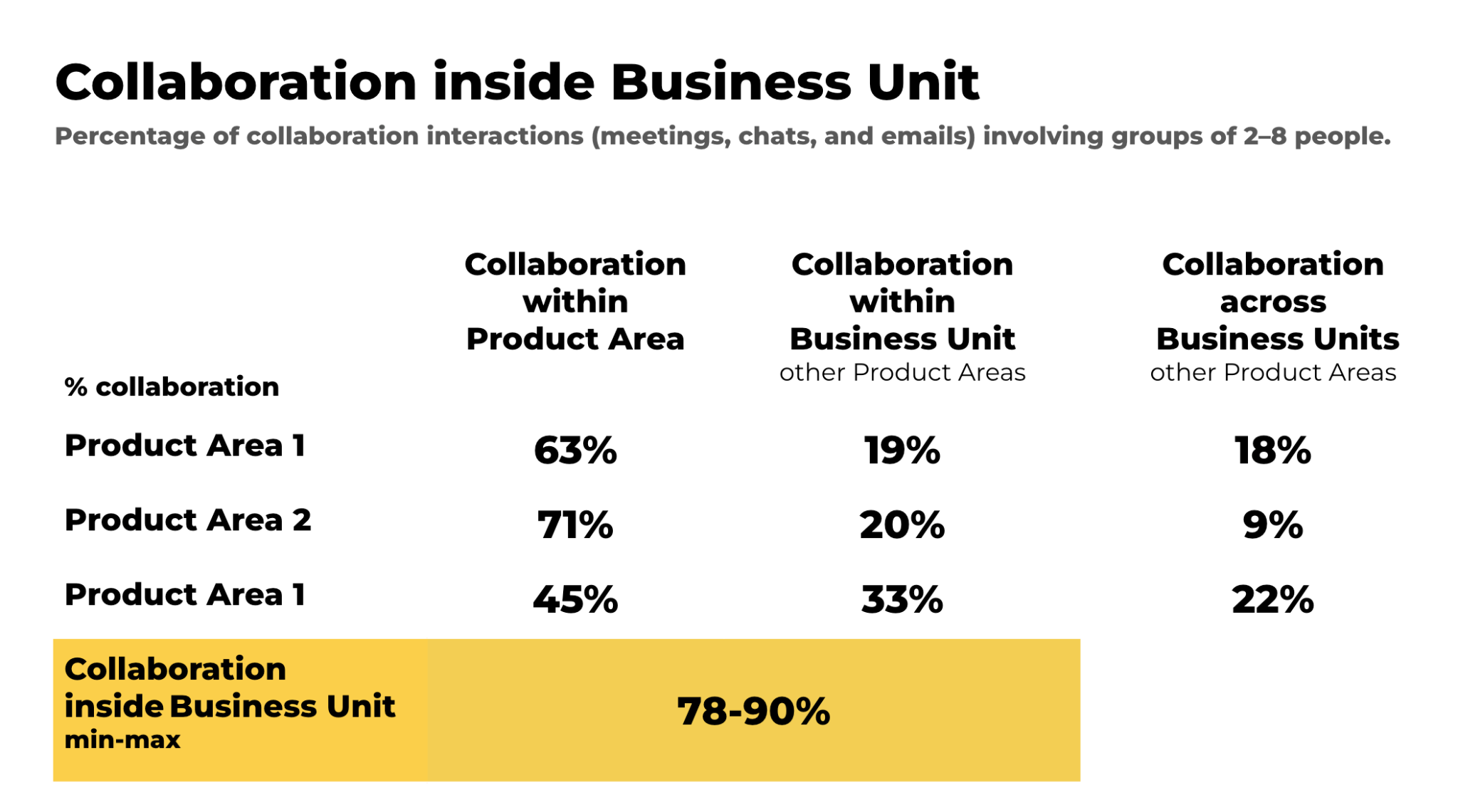
That is exactly what effective organizations should expect. The goal isn’t fewer meetings. The goal is better collaboration. Sometimes more collaboration is exactly what a team needs.
The important question is whether that collaboration creates value or simply consumes attention.
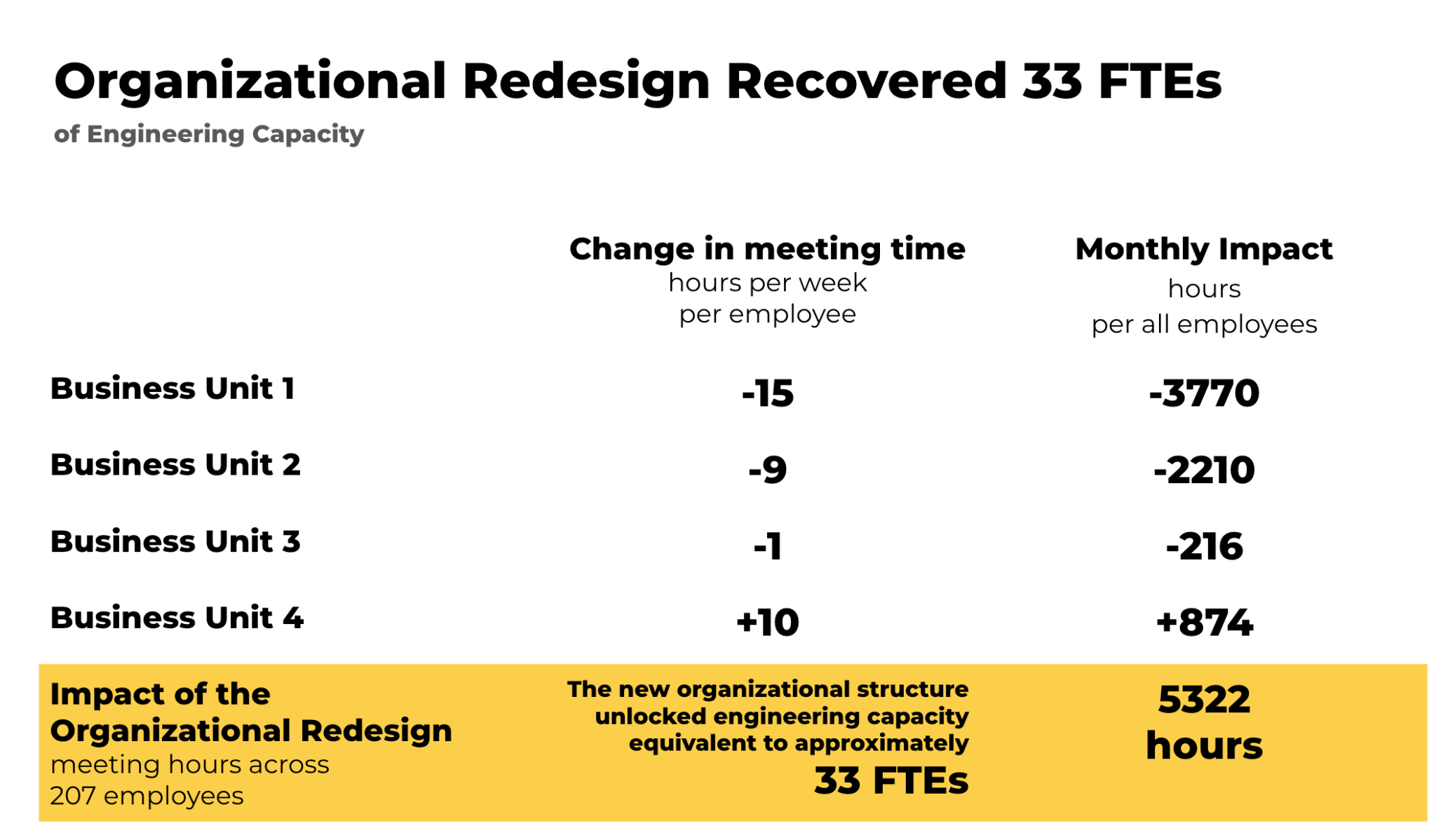
Interestingly, not every Business Unit reduced meetings. One temporarily increased collaboration while establishing product ownership and aligning on strategy.
This illustrates an important principle: sometimes the fastest way to create deep work is not to optimize calendars, but to redesign organizational boundaries.
Engineering Capacity Is the Missing DevEx Metric
Engineering organizations already measure dozens of metrics.
Deployment frequency. Lead time. Build duration. Incident rates. Developer friction experiences.
These metrics are valuable, but very few organizations measure whether engineers actually have the cognitive capacity to continuously improve the engineering system. That is the missing metric.
Not because deep work replaces existing engineering metrics. But because it complements them.
Deep work tells us whether the organization has created the conditions for engineers to solve difficult problems, improve internal tooling, simplify processes, and invest in long-term effectiveness.
In other words, it measures whether Developer Experience is working.
The Next Competitive Advantage
Over the past two decades, engineering organizations have become exceptionally good at optimizing software delivery.
We’ve learned how to build CI/CD pipelines, automate testing, measure deployment frequency, shorten lead times, and improve developer tooling. More recently, AI coding assistants have dramatically accelerated software implementation, making it possible to generate code faster than ever before.
These advances are changing the nature of competitive advantage.
If writing code becomes increasingly automated, simply producing more code will no longer distinguish high-performing engineering organizations.
The differentiator will be something else. It will be the ability to continuously improve the engineering system itself.
Organizations that consistently remove friction, simplify architectures, automate repetitive work, build internal platforms, and improve Developer Experience will compound their productivity over time. Every improvement creates additional engineering capacity, which can then be reinvested into the next improvement.
This is the flywheel that leading technology companies are already building.
The organizations that outperform won’t necessarily have the largest engineering teams or the most AI tools. They will be the ones that create the most opportunities for engineers to perform the work that remains uniquely human: understanding complex systems, making architectural trade-offs, designing better organizations, building better developer platforms, and solving problems that cannot simply be generated by an AI model.
All of these activities depend on one increasingly scarce resource: sustained human attention.
This is why Developer Experience should no longer be viewed as a collection of developer tools or productivity initiatives. It is an organizational capability for creating and protecting engineering capacity.
The companies that recognize this shift will measure not only how quickly software is delivered, but also how much uninterrupted capacity engineers have to improve the way software is built.
Because in the age of AI, the organizations that improve the fastest will not be those that simply write more code. They will be the ones that continuously improve the systems that produce that code.
And that begins with protecting—and deliberately expanding—the engineering capacity that makes continuous improvement possible.

